Tuesday, March 11, 2014

Farwell to my Aussie Pal

My Aussie cubicle buddy is winging his way back to Australia (no doubt a glorious fall) just as winter releases its' icy grip here. Andy took full advantage of all our country had to offer, hitting the slopes whenever he could. I took perverse pleasure, as all Canadians do, watching him adapt to Really, Truly, No-kidding-around Cold.

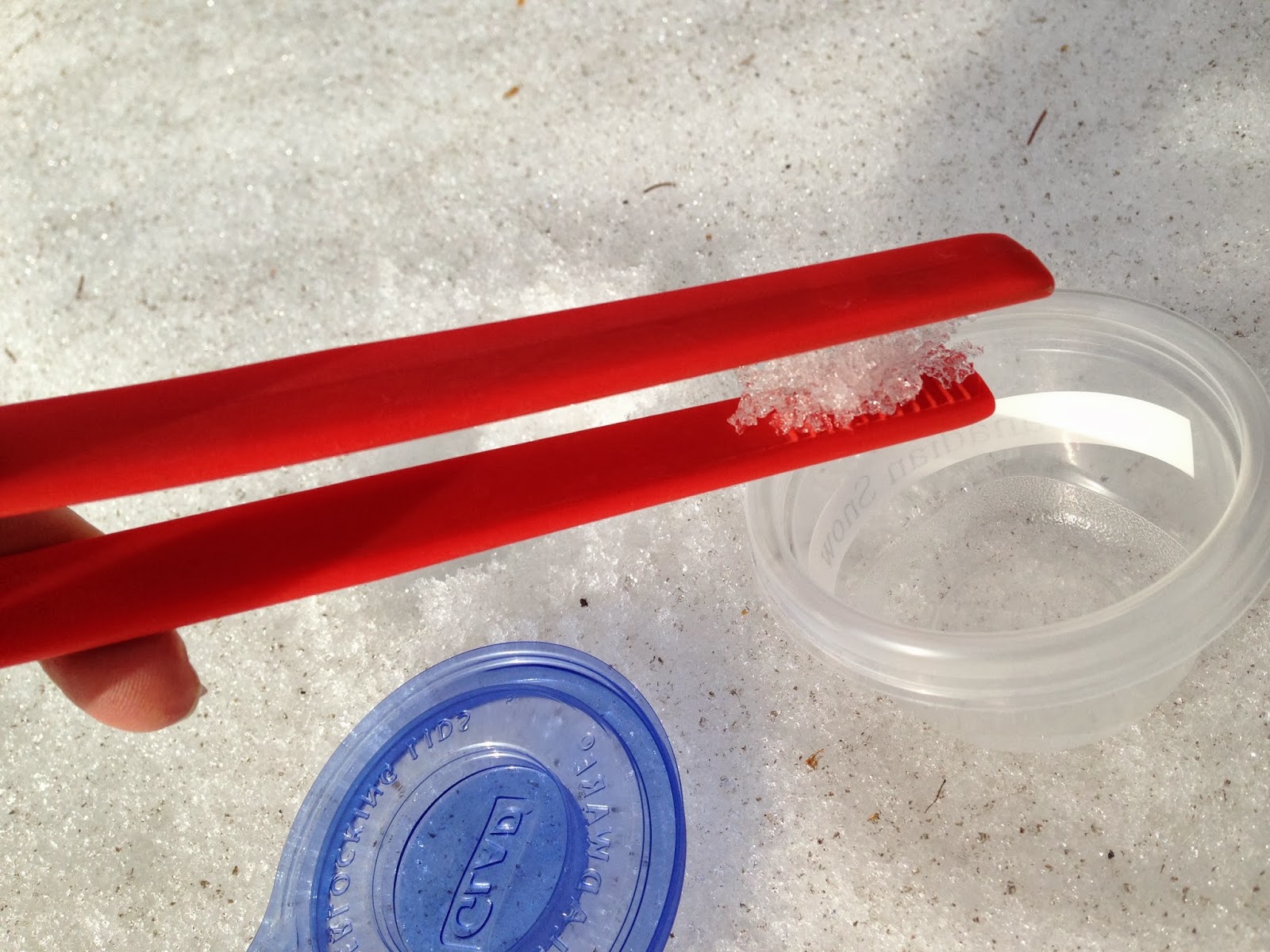
Andy, I did not have a chance to send you off properly, so in the spirit of our camaraderie, I am sending you some genuine Canadian snow to remind you of good times.

No worries, being part of a pro-active organization, I've thought ahead to package well to survive the trip down-under.
With the added security of duck tape.
There; that should do it!

P.S. The doctor finally got back to me and sure enough, I had cracked my ribs, fifth and sixth.  The breaks are contiguous, which I take to be a good thing.

Sunday, March 2, 2014

The holy grail of workflow solutions

Let's say you have a work process that is tedious, repetitive. Tasks get dropped and forgotten. Approvals get hung up. You are constantly having to go back through your pile to check on the status of your work. It seems with all the electronic gadgetry we have available today, someone should have made an app for that. By now. Surely!

The software solution you are looking for is workflow, and it is an add-on feature of many products including collaboration software (ex. Sharepoint, Alfresco), financial software (ex. Deltek), records management software (ex. OpenText) and others. Workflow is not required of the application but it is a nice-to-have. Developers have also built custom applications based on industry, such as contract signing (ex. Docusign) and facility management.

Simple Accounts Payable Workflow

Countless times I have seen a software demonstration culminating in a workflow example, usually in accounts payable. Oh, so smooth it looks in demo, like watching a knife demonstration at the county fair.
Why is it so difficult to take this concept and apply it to our real-life examples back home? Here's the missing piece you absolutely cannot overlook. You have to know what it is you do now. Excellent software solutions abound where there are standards and a programmer can write to that standard. But what is standard about routing paperwork? Every business does things a little differently. It is our own ignorance of our processes that will send the project down rabbit trails and back.

Do your implementation team a fair service and be clear how you want the workflow to work. Keep it simple. When it does what you wanted it to do, call it good and be done. For a while.

Excerpt from a reddit conversation:
___________________________________________

What's something you can talk about for hours on end?
...
–]jayzee124 33 points ago
conspiracies, cars and trucks, and the universe and how mind [blowing] it is.
[–]Screwbit 7 points ago
you and I could never be friends.
[–]SharkPanda 3 points ago
Yes but can you talk about all of them at the same time?
_____________________________________________

Watch for scope creep. Let's say your first shot at workflow solves one irritant. Once you get a good look at what it can do, horizons open up at all the other things you could automate. Tinkering and broadening the scope can kill an otherwise great solution. Take pauses, enjoy the changes and give the new way time to work out its bugs before you automate the next big thing.


Saturday, March 1, 2014

Paintings for Pennies

Help me fill in my penny collection. If you have a penny I need, comment on this blog. I will mail you a hand-painted watercolor, 4" x 6" on receipt of my penny. If you want to fill in more, I will send you an 8" x 10" watercolor. The penny does not need to be collector's quality. I'm looking for cross-Canada participation, and maybe a few penny pals. This little project has already received international attention. Who knew our pennies traveled so far?

The Story

Now a little on how this all started. Around about the warm and hazy summer of 2009, I read an article about the upcoming demise of the penny. In 2007 our Canadian Mint sponsored a poll, and it turned out that the average Canadian cares little about the penny. Our little copper companion weighed down wallets, but nobody cared one way or another. I knew then that the coin's days were numbered. Watching out my window at my granddaughter play with her neighbour friends, I hatched my plan. I asked the girls to help me fill in a collection, one penny per year, to fill up my page. Off they went hunting for copper treasures, squinting in the bright summer sun, to see if they had a winning year. I warmed in my grandmother's satisfaction of seeing young ones occupied with a little thing, hardly consequential at all. But so much fun.

Those three energetic girls filled in a lot, but not all, of my sheet. In the past few years the collection gathered dust in the back of my to-do pile, just as my kijiji ad gathers dust somewhere around page thirty. This spring, flush from some personal successes, I decided to finish off the collection. I would broadcast far and wide, and finally complete the penny sheet for my granddaughter, Naomi. These past few months have been more than successful, leaving only five spots left since 1940.

All that is left to fill  is 1944, 1948, 1954, 1957, and 1958. The year 2001 is a shade of it's original form having spent far too long in the water pump of my daughter's washing machine. This has been so much fun I am now moving to fill two more sheets for the two girls who helped Naomi fill in the collection that golden summer a few years ago.

Here are the pennies (and quantities) I am looking for:

1941 (2)
1942 (2)
1943 (2)
1944 (3)
1945 (2)
1946 (2)
1947 (2)
1948 (3)
1949 (2)
1950 (1)
1951 (2)
1952 (2)
1953 (2)
1954 (3)
1955 (2)
1956 (2)
1957 (3)
1958 (3)
1959 (2)
1960 (2)
1961 (1)
1962 (2)
1963 (2)
1964 (2)
1965 (2)
1966 (1)
1967 (1)
1968 (2)
1969 (2)
1970 (2)
1971 (2)
O
O
O


O
O
O
O


O
O
O
O
O
O
O
O
O
O
O
O
O
O
O
O
O
1996 (1)
O
O
OO
O
O
O
O
O
O
O
O
OO
O

O


Here's a picture of Naomi's penny collection so far:


...and here is how the two girls' collection is coming along.

Tickling My Fancy

Besides passing on a story and heritage to Naomi and her friends, I am tickled to instigate a project where items of nominal value are traded to the mutual satisfaction of the traders. Pennies have no intrinsic value. But there is effort on the part of the collector to find a prized year, and satisfaction in discovery. Similarly, there is nominal value in paper and pigment. The artist is offering time and talent in exchange. Funny, the cost of postage outweighs the nominal value of the product we are mutually shipping. Yet there's a feeling of fulfillment between collector and artist; a fair exchange.

Progress To Date

 Two acquaintances from www.jehovahs-witness.net filled in the king's portion of my empty spots. It is a delight to see your packages arrive, and I am so excited about creating some watercolors for you both. Though this project did not go viral, it has been fun. As an added bonus, never asked for but received, Canadian pennies that are older than anyone alive:


And here's an example of my artwork:


By the way, here's the results so far of my attempt to broadcast to a wide audience and reach that elusive tipping point. I posted this request on Blogger, Facebook, Google+, twitter, and kijiji.ca. No nibbles until I posted on a discussion board I frequent, www.jehovahs-wtiness.net. There, I encountered three generous collectors who radically filled in my board..and then some!

These results inspired me to revisit my Klout scores, which have climbed, with a little more disclosure on my part, to 41.48. 

The first painting heading out, a watercolor of a Great Blue Heron, 8" x 10", based on a nature photograph by Ron Davis. 


 Thank you, Tony, intrepid browser of kijiji, for adding to the collection. This is what you picked:

And the latest painting winging it's way across the continent:


This is the memory of the confluence of the Smoky and the Sulphur rivers with the bold contrast of poplar with Spruce, in an untamed part of our world. 

My next two contributors provided some inspiration, after I learned a bit about their own interests. For a nine year old girl:
This is a mixed media, pen-and-ink, sparkly glue, and some familiar loom bands. 

And for a seven year old boy, something smells "fishy":
Another mixed media, pen, ink, and Nori. There's room to incorporate a penny if they like. Maybe find a special penny, one that marks the year they were born for instance.

Word of mouth continues to get me mileage. My friends Val and Dailan filled in a king's share for the two friends.
Sunday, February 23, 2014

Fitting my way to Boredom and Back

I know that boredom was the chief reason I've quit fitness and weight loss programs in the past. So I thought I'd dig deeper in to the texture, shape and meaning of my boredom. The other day I found a great video clip that sums up contemporary thinking:

Why do we get bored? By vsauce

The clip inspired me to check out my own boredom level on the BPS scale. It turns out I'm the Rock of Gilbratar, unshakeable, and not prone to boredom at all! I think I am six percent on the boredom scale. Reflecting on the various examples provided in the quiz, I must be darned good at managing boring situations. For example, I figure it is my responsibility to enjoy my work, so I manage it so those moments of flow and enthusiasm happens. I have hobbies. I paint. I knit. I write. I am well-supplied with books. I play my games on my iPhone. If I know I will spend time in a waiting room, a queue, or other situations I am powerless other to sit still, I bring along plenty of things to do.

This time I have adopted similar strategies to push through the grinding boredom of machine exercise, and diarizing all my food (130 days and counting). This time I filled the gaps with apps like myfitnesspal. This little app frees me from manually calculating, providing me with totals, tracking, and graphs effortlessly. To fight boredom on the treadmill, I purchased the accessory and downloaded related apps of Blue Goji. These games only move when I do, and the harder I push, the better my score.


Given my intolerance of boredom and the many ways I avoid it I doubt my problem is low dopamine levels.

If diet and exercise bores me, it is because it is interminable. There is no guarantee, if I stick to the plan, that I would eventually hit that ideal in fitness and trim. I am prometheus, tortured by the capricious gods to have my liver eaten and regenerated forever. I also bore from these activities, as they do not engage my mind. I have received high reward for thinking, so I naturally gravitate to thinking activities to make me feel better. As fine as the endorphin high is, it does not engage my mind. Where is the exquisite pleasure of working out a problem, or crafting words to move people?

The solution seems obvious. I use my creativity to engage in exercises that use both mind and body. Onward I go!

A book to read, Boredom: A Lively History by Peter Toohey.

Friday, February 21, 2014

The Org Chart and the Middle Manager

I am completing the book, "Everything is Miscellaneous" by David Weinberger, surely a must-read for budding records managers, librarians, and big-data affectionados. Before I lose it, I am capturing (from this book) the history of the organization chart, something that has eluded me for fifteen years.

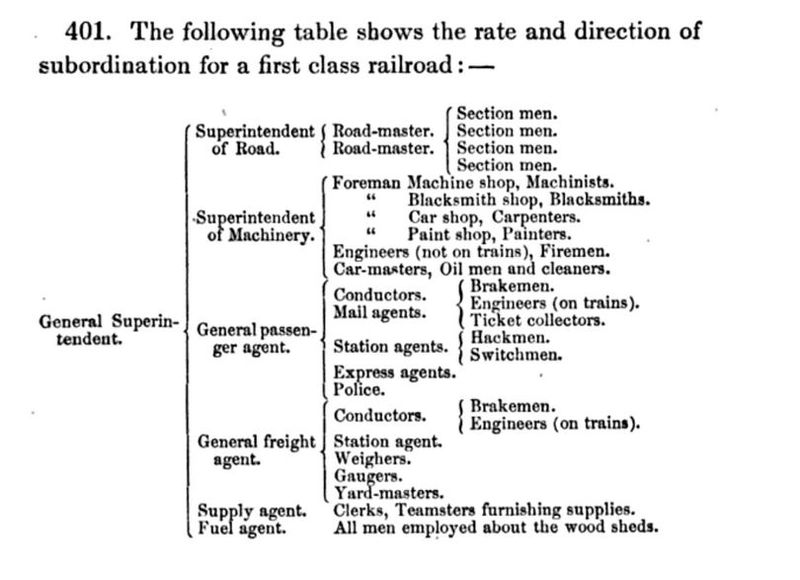
Daniel McCallum drafted the first modern organization chart in 1857, to describe the complex reporting structure for New York and Erie Railroad.
The First Organization Chart


This question of origin and history has haunted me ever since a lawyer asked for the organization charts for Michener Centre dating back to the 1940's. I looked hard enough to say with confidence that if these organization charts were ever made, they do not exist now. I advised that if such a chart was needed, the lawyer would have to pull back individual employee files to reconstruct the reporting relationships. A simple request had become a slog.

So organization charts are a useful business tool, and help clarify relationships. They satisfy an underlying need in all of us for order, clarity. The jungle of existence is cleared away and we have focus and direction. I recommend Weinberger's book to understand how the third order of organization - big data and the cloud - can turn this sense of order on its' head.


This being early morning, my first desire to capture this history (for my own peace of mind) was quickly followed by a recollection of my own working organization chart for the middle manager. I have used this chart many times to explain to colleagues and subordinates how middle managers keep tabs of the "front line" and how we simultaneously reassure executive that all is in order.


I start by drawing in the "front line", the life-blood of the company. These are the workers who have daily contact with the customers. I want my employees to be smiling, because I want my customers to be smiling. Empowered, happy, confident workers are made by great supervisors. The middle manager's job is to mentor, coach, and guide supervisors to be the best they can be at taking good care of those front-line workers. 

The second half of the middle manager's job is to report to executive what is going on. They are too far removed from the day-to-day to know themselves if the front line is working and the customers happy. So they broadcast requests for information, and try and scout ahead. The good middle manager keeps executive abreast of what is going on, reporting on successes as well as potential problems before they become too large.

That's it. A little bit of book mining and brain mining. Find ways to be happy-happy, people.

Sunday, February 16, 2014

Obesity, a Complex Disorder

I am going to put forth a thought that obesity is a complex disorder where the resolution is going to involve the complex interplay of several hormonal processes. I recently read Dr. Sharma's blog where he describes persistent weight loss as trying to run down the up escalator.

This fight against our own body's processes reminds me of a battle I had with the thermostat in our old apartment. It was a fancy thing, designed to keep temperature constant between a range of high and low temperatures. It had a flaw however. If temperatures snuck above the high setting, the furnace would blow full blast until it got cooler. Think about that for a minute. Our solution? If it were a cool day, we would open every window in the house in the hopes of beating the furnace. If it was a hot day, we would have to set the thermostat above the ambient temperature. Over the next few days, I would gradually lower the higher setting on the thermostat, as the apartment cooled. It was a trick to fix a flaw.

I have also been thinking of the complex interplay of hormones that regulate hunger and weight. The miracle of insulin was solved when the discoverers realized it has a balanced relationship with glucose. Neither can be too high.
This is a two-way relationship, complex enough to figure out. But what if the relationship between hunger and weight gain were even more complex; two-way, three-way or even more?
https://www.blogger.com/blogger.g?blogID=2442789084598877880#editor/target=post;postID=7809158473050261965
Nicholas Perony's Bats 


With a system that complex, how might we ever disentangle it? There's Cortisol, Leptin, Ghrelin, Insulin, Estrogen and Progesterone. There could be as many as forty hormones involved. It should not be surprising that so many processes are involved in eating, acquiring energy and storing it. Doing this efficiently is critical to our survival. I am reminded of Penfield's bain map.
Representation of Penfield's Brain Map
 We dedicate a good many of our resources to this interplay. It's complex, and it's central to our survival.

So again, back to the disentangling. Perhaps this could be mapped out using the new technology that allows us to build analogues of bodily systems; organs on a chip.

If we build a successful analogue that replicates the body's propensity to obesity (at least among a percentage of the population or under certain conditions), we can then more readily test adding or subtracting the various hormones/foods/interplays.

Perhaps the answer will be to add a new artificial organ/hormone, to create a "too high" setting on our thermostat. A trick to fix a flaw in our makeup.

Saturday, February 8, 2014

id Whisperer

Using Haidt's model of intelligence and motivation, how can I influence my "inner elephant" to change old habit patterns?

This "inner elephant" is our inarticulate cognition that directs nearly all our activity. It handles spacial awareness, visual processing, autonomic functions, emotions, and all those things we call "unconscious". Haidt has turned my understanding on its' head. No only is my inarticulate side at least equal to my reasoning, it is running the show. Wherever my elephant heads, that is where I go. My reasoning side is left to chatter away to explain and justify my behavior. At times my reasoning may influence my judgement and intuition, but that is rare.

So if I am undertaking a new habit, I must engage my intuitive side in the process, convincing my ID that this is a useful, charming, and helpful change. It is now dazzlingly clear to me why trying to "tough through it" or beat my self in to submission has limited effect. As soon as my attention is diverted, my elephant is running away!

Also turned on its' head is my old image of ID as dark, mysterious, sexualized (thanks, Freud!) and slightly troubling in its' unknowability. An intelligent and friendly elephant I can relate to. This inexpressive side is not mysterious; it's me!

With these new revelations, might I find new ways to team up with my intuition/ID/elephant, by communicating in a language that it understands? After all, we have horse whisperers and dog whisperers who have dedicated themselves to understanding creatures with an alien and highly physical communication. I am always impressed at how quickly my daughter builds rapport with a dog, by being highly observant and providing a consistent message. Less chatter, and controlled body movements.

I have the added advantage in that I am speaking not to an alien form, but myself. My morals and judgements feel right, because they are my own.

On top of all this, affection is important. Love ourselves and all we've accomplished and give ourselves all the reassurance that new things are possible. Here's a rough list of ways I might communicate with my inner elephant.
  • Read confirming authors and have imaginary conversations with them. 
  • Write Haidt about the implications of his model to instigate permanent habit change. I would also like to describe the connection with coach Wooden's style, who instinctively taught his team that self-esteem comes from integrity. 
  • Make posters.
  • To get moving, chatter less, move more. Move the body, change the demeanor for the few crucial minutes to the new activity. I only have a few moments as my reasoning side is so disractable.
  • Afterwards, chatter, reflect after on the positive outcomes, feelings, texture of the new experience. Use a little Buddhist mindfulness to anchor the new experience. 
  • Find others of like mind for encouragement and support (mind's preference for consensus).
  • What if I am an iconoclast, forging new pathways?
  • Using my power of rhetoric, bring new converts alongside.
  • Never try and beat my will in to submission. Rather, use gentle encouragement. Recall positive outcomes in the past. 
An example:
I see a re-occurring pattern of declining energy through the week, culminating in an extra-hungry Friday, as I try to use food to increase my energy levels. What might I try to break this pattern?
  • Self-care Thursday night? But I did that with no noticeable effect.
  • I did recall the positive feelings from the increased exercise, and attempted to duplicate it by exercising at home. Three sets of stairs instead of five (my knees were making crackling noises). Ten minutes instead of twenty on the lifecycle. 
  • Dry popcorn on hand to get past the initial hunger?
  • Caffeine in the morning? Two cups of green tea?